





Devens Driving Tour
This project is a result of a Girl Scout Gold Award project by Keziah Salter, an Ayer resident. She became interested in Fort Devens after developing an interest in history in middle school. She has been in Girl Scouts since Kindergarten.
Nashua River Tank Road Trail
1 Filter Bed Road East
This trail used to be a tank road, but was turned into a walking trail after the Army ceased using the land. The trail goes along the Nashua River which has been designated as a National Wild and Scenic River. For many years the Nashua River was a dumping ground for many factories and paper mills until a local environmentalist, Marion Stoddart, began the fight to protect the river in the 1960s. Stoddart’s effort began on Fort Devens where she was given an office and assistance from soldiers.
Verbeck Gate
Jackson Road & West Main Street
Also known as the Main Gate, this gate has served as one of the primary entrance gates for Fort Devens since it was built in the 1930s. The gate is dedicated to General William J. Verbeck who was Post Commander for Fort Devens from 1959 to 1963.
Vicksburg Square
2 Buena Vista Street, Devens
This quadrangle was built between the late 1920s and early 1940s as part of a larger initiative backed by Congresswoman Edith Nourse Rogers to make Fort Devens a permanent Army post. The buildings were built as barracks for the 13th Infantry Regiment who were know for their role in the Siege of Vicksburg during the Civil War. During World War II the buildings were used as part of the Fort Devens hospital system. Immediately after the war they were used by MA State College/UMASS as their Devens campus. From 1951 until the 1990s, the Army Security Agency/Intelligence School used the buildings as classroom space.
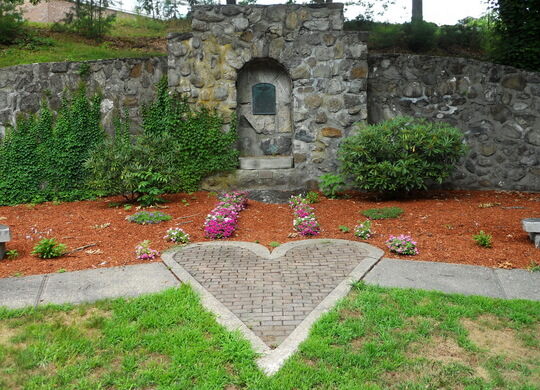
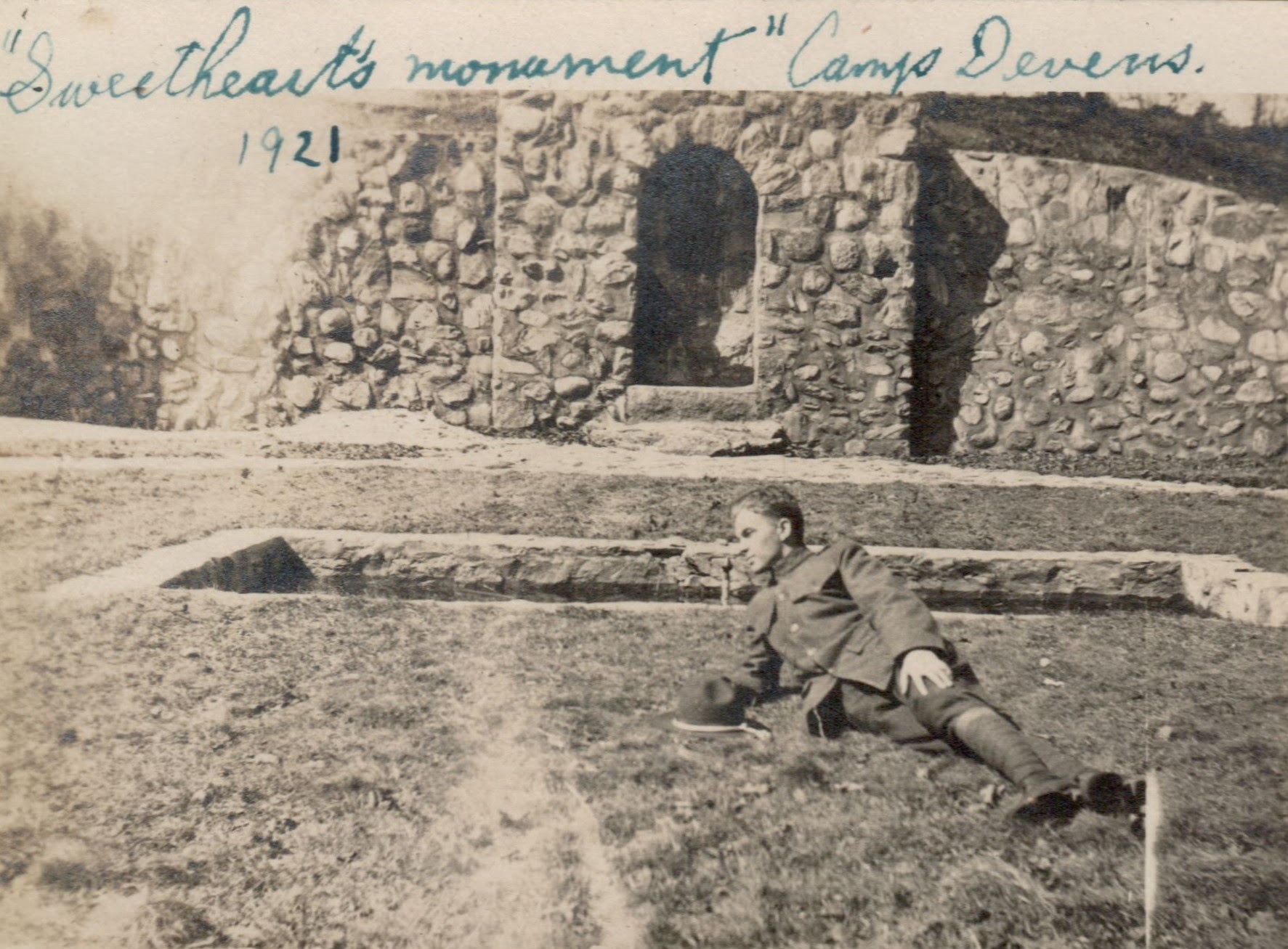
Sweetheart Memorial
Jackson Road, 42°32’51.0″N 71°36’30.8″W
Camp Devens was built during the summer of 1917 and opened in September of that year to train soldiers for overseas action. During that time, the Sweetheart Memorial was constructed. A popular story was that the memorial was built by stones brought to Camp Devens by the girlfriends or wives of soldiers. While a nice idea, it proved much easier to build the memorial with rocks taken from the camp itself.

War Memorial Park
Sherman Ave, 42°32’51.0″N 71°36’30.8″W
This park, with its numerous monuments, is dedicated to those who lost their lives during the World War I, World War II, the Korean War, and the Vietnam War. There are plaques honoring various units which deployed from Fort Devens to all the major conflicts of the 20th century.
Red Cross Building
176 Jackson Road, Devens
This building is the last remaining wooden building from World War II at Devens. It was built in 1941 and housed the Red Cross until 1996. The Red Cross’ work on Fort Devens was essential to providing comfort and recreation to soldiers and also served as a direct communication line to soldiers’ families.
Fort Devens Museum
94 Jackson Road, Devens
The Fort Devens Museum preserves and shares the history of Camp Devens, Fort Devens, and the current military and civilian communities at Devens through exhibits and public programming. The museum is housed in the third floor of a former barracks built in the late 1950s. tank trail
Headquarters Building
29 Buena Vista Street, Devens
The Headquarters building was once the epicenter of Fort Devens, built in 1934 as Fort Devens transitioned to a temporary cantonment to a permanent Fort. Much of the construction work during the 1930s was done as part of the Works Progress Administration (WPA).
Fort Devens Cemetery
52 Patton Road, Devens
Fort Devens did not have a cemetery until 1931. Prior to that, soldiers were buried in Woodlawn Cemetery in Ayer if they had no next of kin. This cemetery was built in 1939 and holds military personnel and their dependents, 22 Prisoners of War, and 94 graves moved from Deer Island in Boston Harbor, some dating back to the War of 1812.
Mirror Lake
Mirror Lake Road, Devens
Mirror Lake is a kettle pond, a deep pond formed by receding glaciers at the end of the Last Ice Age. Before it was named Mirror Lake, the body of water was known as “Hell Pond,” possibly due to the depth of the water. In the 1920s Robert Goddard conducted early rocket experiments near this site. Later, amphibious training was carried by the Army.